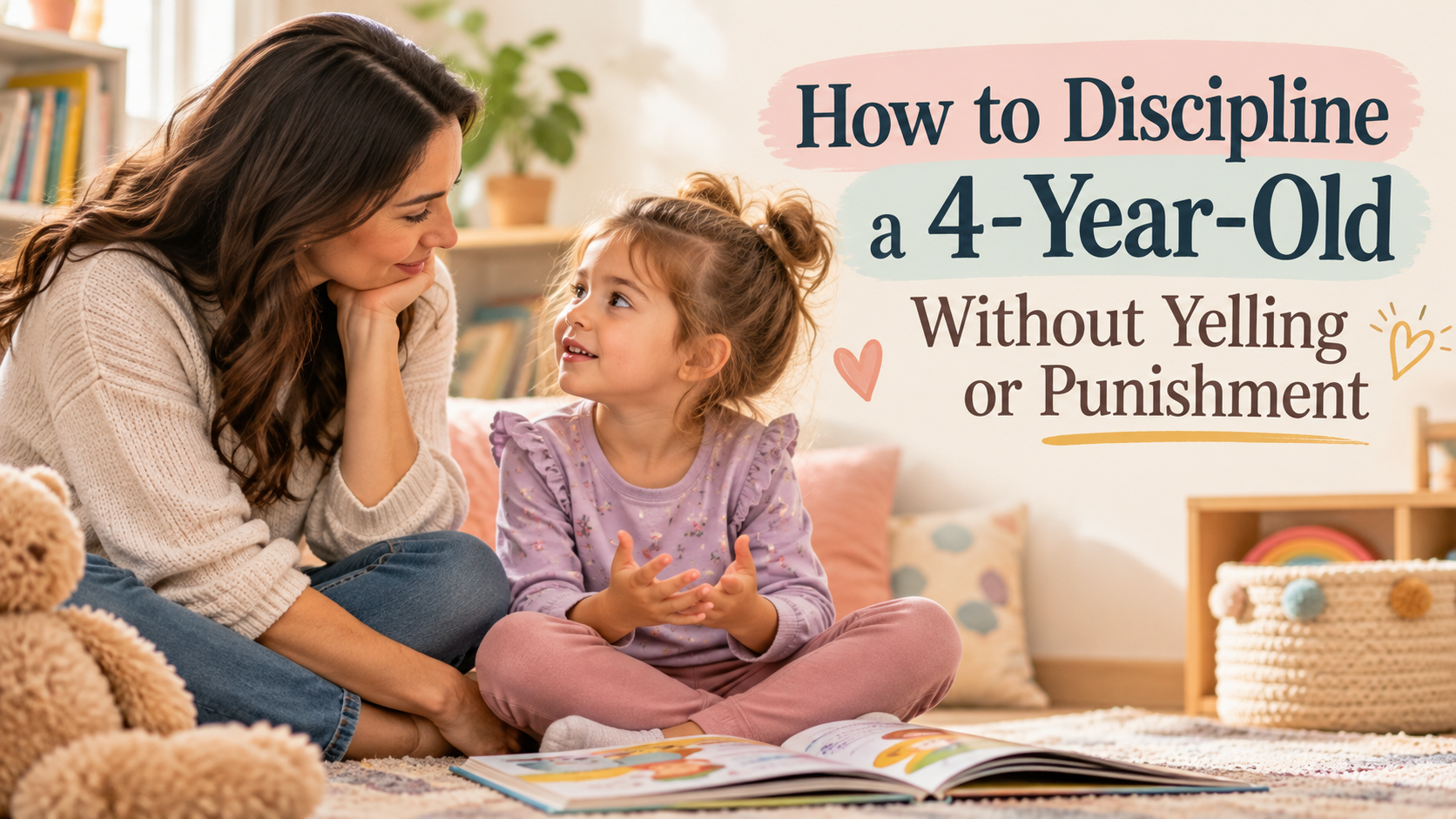
Parenting a 4-year-old can be full of delightful discoveries and challenging moments. One minute your child is laughing with you; the next, they may refuse to put away toys or become overwhelmed when playtime ends.
If you are wondering how to discipline a 4 year old without yelling or punishment, the goal is not perfect obedience. It is to teach emotional skills, safe boundaries, and better choices through patient guidance.
Here are practical, age-appropriate strategies that parents and caregivers can practice at home.
How Do You Discipline a 4-Year-Old Without Yelling?
Use clear boundaries, short instructions, limited choices, encouragement, and calm, related consequences. Positive discipline focuses on teaching the behavior you want to see instead of frightening or shaming a child.
For example, instead of “Stop throwing your toys!” try: “Blocks are for building. If they are thrown, we will put them away until it is safe to try again.”
This is firm, understandable, and respectful. It makes clear that feelings are allowed but unsafe actions are not.
Why Is My 4-Year-Old Not Listening?
Children this age are learning independence while their impulse control and emotion regulation are still developing. A child who seems defiant may actually be tired, hungry, overstimulated, frustrated, or confused by a long instruction.
• They want to make more decisions independently.
• They may struggle to name or manage strong feelings.
• They may find multi-step instructions difficult to follow.
• Transitions and unpredictable routines can be overwhelming.
• They may need connection, reassurance, or additional developmental support.
Understanding the cause of behavior is not the same as excusing harmful behavior. It helps you choose a response that teaches.
10 Positive Discipline Strategies for 4-Year-Olds
1. Stay Calm and Model Respectful Behavior
Children learn from adult examples. Use a steady voice and pause briefly if you need to collect yourself. You can say: “I can see you are upset. I will speak calmly, and we will work this out.” Being calm and being firm are not opposites.
2. Set Simple, Consistent Boundaries
Agree on a few understandable rules: “We use gentle hands,” “We take turns,” and “We put toys away when we finish.” Explain rules during a calm moment and remind your child before activities where they may need help.
3. Notice and Encourage Positive Behavior
Instead of paying attention only to mistakes, describe the behavior you appreciate. Say: “You waited for your turn—that was patient,” or “Thank you for putting away your crayons.” Specific praise helps children understand what to repeat.
4. Offer Two Acceptable Choices
Choices give children some control without removing the boundary. Ask: “Would you like the red shoes or blue shoes?” or “Pajamas first or teeth first?” Do not make safety requirements optional.
5. Connect Before Correcting
Acknowledge the feeling and keep the limit. For instance: “You wanted to keep playing. It is hard to stop. It is still time to clean up, and I can help you start.” Connection helps children hear your guidance.
6. Redirect Toward a Safer Action
Show the alternative rather than repeating “no.” If your child draws on the wall, say: “Crayons go on paper—here is your drawing pad.” If they jump on furniture, suggest a safe place to move instead.
7. Use Logical Consequences, Not Shame
Keep consequences directly connected to the behavior. If a toy is repeatedly thrown, put it away temporarily. If water spills, invite the child to help wipe it up. The purpose is learning and safety, never humiliation.
8. Teach Feeling Words
Introduce words such as angry, disappointed, worried, and frustrated. During a quiet moment, ask: “How did you feel when the tower fell?” Practice ways to seek help, use words, and calm down. Children need repeated practice and adult support.
9. Teach Through Interactive Storytime
Characters and pictures make abstract ideas easier to discuss. Pause while reading and ask: “How does the character feel?” “What could they do next?” Use stories as invitations to talk rather than tests with right or wrong answers.
10. Make Daily Routines Predictable
Use simple morning and bedtime sequences, picture reminders, and advance notice before transitions. “In five minutes, we will tidy up for dinner.” A familiar routine can reduce friction and help your child practice cooperation.
How to Respond to Hitting, Screaming, or Tantrums
Your first priority is safety. If your child hits, gently block the action, separate children as needed, and state the boundary: “I will not let you hit. Hands are for keeping people safe.”
During a tantrum, stay nearby when possible, reduce unnecessary talking, and offer calm support. Do not try to explain a complicated lesson in the most emotional moment. Once your child settles, briefly name the feeling and practice a better response.
Example: “You were angry when it was time to leave. It is okay to feel angry, but we cannot hit. Next time, tell me you need help.”
What to Say Instead of Yelling
Instead of Try saying
“Stop crying!” “You are upset. I am here with you.”
“Why never listen?” “Look at me for a moment. Here is what we need to do.”
“You are being bad!” “That choice was not safe. Let us try a different one.”
“Clean this mess now!” “Let us start with the blocks.”
“Do not be angry!” “You can feel angry, and we still use gentle hands.”
“Because I said so!” “We need to leave now to get home safely.”
What If Gentle Discipline Does Not Work Right Away?
Learning self-control takes time. Children may follow a rule today and struggle tomorrow. Review whether expectations are developmentally appropriate, instructions are short, and the child is rested and supported. Look for gradual improvements, not perfection.
If aggression, severe distress, or behavioral difficulties are frequent, worsening, or interfering with everyday life, talk with your child’s pediatrician. Children with different communication or sensory needs may benefit from individualized strategies.
How Storytime Can Support Positive Behavior at Home
Reading together creates an unhurried opportunity to talk about kindness, consequences, and choices. You can use this three-part routine:
1. Before reading: Look at the pictures and ask, “What do you think this story will be about?”
2. During reading: Pause occasionally and ask how a character might feel or what they could do next.
3. After reading: Connect the story to everyday life: “What is one kind choice we can make tomorrow?”
Keep these conversations playful and pressure-free. Storybooks complement parenting guidance; they do not replace individualized professional advice where needed.
Frequently Asked Questions
How do you discipline a 4-year-old who does not listen?
Get their attention, offer one short instruction, and follow through with calm, consistent limits. Notice cooperation and practice skills when your child is calm.
What is the best punishment for a 4-year-old?
Harsh punishment is not necessary to teach limits. Use clear boundaries, age-appropriate explanations, and reasonable consequences tied directly to the behavior.
How do I get my 4-year-old to listen without yelling?
Keep instructions specific, offer limited choices, establish predictable routines, and praise helpful behavior. Check whether the child understands what you are asking.
Is it normal for a 4-year-old to have tantrums?
Yes, tantrums can occur as emotional skills develop. Seek advice from a pediatrician if they are unusually intense, prolonged, frequent, or unsafe.
Can I discipline a 4-year-old without time-outs?
Yes. Calm-down support, redirection, practice, choices, and logical consequences are among the alternatives available.
How do you teach a 4-year-old right from wrong?
Use consistent rules, short explanations, role-play, and stories to practice empathy and safe choices.
Can children’s books teach positive behavior?
Books can start meaningful conversations about feelings, kindness, and decisions, especially when adults read interactively.
How long does positive discipline take to work?
There is no fixed timeline. Progress depends on development, support, consistency, and the needs of the individual child.
Meet Mrs. No No’s Storybook: A Gentle Way to Discuss Positive Choices
Every child deserves patience and loving guidance while learning to make positive choices. Mrs. No No’s Storybook, by Susan W. Owens, introduces an expressive character whose large eyes and nonverbal cues can invite children to reflect on behavior through story and interaction.
Susan W. Owens is a retired special education teacher with 41 years of experience. Her 40-page illustrated children’s book is a storytime resource for parents, caregivers, and early childhood educators who want to talk about character, kindness, and responsible choices.
During reading, try asking what Mrs. No No notices, how a character may feel, and what a kind alternative might look like. Keep the emphasis on understanding and learning—not fear or shame.
Buy Mrs. No No’s Storybook Boxed Set
Make storytime an opportunity for warm conversations and positive guidance. Explore Mrs. No No’s Storybook on the official Dorrance Publishing product page and choose the boxed-set option if available.
BUY NOW: https://bookstore.dorrancepublishing.com/products/mrs-no-nos-storybook-1
Final Thoughts: Discipline With Love, Not Fear
Learning how to discipline a 4-year-old without yelling begins with a shift in perspective: discipline is a chance to teach, not simply correct. Every calm response, clear limit, and moment of encouragement gives your child another opportunity to practice the skills they are still developing.
The goal is not perfect obedience. It is helping a child feel safe, respected, and capable of growing.