Helping children grow into thoughtful, confident people is a journey made up of small, everyday moments. A kind word after a difficult day, a patient explanation when something goes wrong, and a shared story at bedtime can all create opportunities to learn.
When adults approach behavior with warmth and clear expectations, children have room to practice new skills without feeling defined by their mistakes.
Why confidence and kindness belong together
Confidence is not about always getting things right. For a young child, it can mean trying again after a mistake, asking for help, or expressing a feeling in words. Kindness means noticing how our choices affect others. Both develop through practice and supportive relationships.
Children learn a great deal from what adults do. A calm response, a genuine apology, or a simple thank-you can show a child what respectful communication looks like.
Five gentle ways to encourage positive choices
1. Notice the behavior you want to see
When a child shares, helps, waits patiently, or uses kind words, describe exactly what you noticed. Instead of a general “Good job,” try: “You gave your friend a turn. That was thoughtful.” Clear, specific feedback helps children understand the action being encouraged.
2. Keep expectations simple
Young children benefit from rules that are easy to understand and remember. “Use gentle hands” and “Take turns” are often clearer than long explanations. If a rule is forgotten, restate it calmly and model the next step.
3. Give children language for feelings
Children may struggle to explain frustration, worry, or disappointment. Naming feelings can make a difficult moment more manageable: “It looks like you're disappointed that playtime is ending.” You can acknowledge a feeling while still maintaining a boundary.
4. Turn mistakes into learning moments
A mistake is an opportunity to practice a better response. After everyone is calm, ask simple questions: What happened? How did it affect someone else? What could we try next time? The goal is learning and repair, not shame.
5. Use stories to start conversations
Stories let children explore choices through characters rather than through a lecture about their own behavior. Pause during reading and ask: “How do you think the character feels?” or “What would be a kind thing to do?” There is no need to rush toward a perfect answer.
A simple storytime activity for home or school
Try this short routine during your next read-aloud:
- Before reading: Ask children to name one kind action they have seen today.
- During reading: Pause when a character makes a choice, and invite children to imagine what might happen next.
- After reading: Ask each child to choose one small act of kindness to try tomorrow.
- Later: Revisit the idea without pressure. Celebrate effort and talk about what felt difficult.
This activity can be adapted for a child's age, language, preferences, and support needs. Some children may prefer pictures, gestures, or extra time to respond.
Meet Mrs. No No’s Storybook
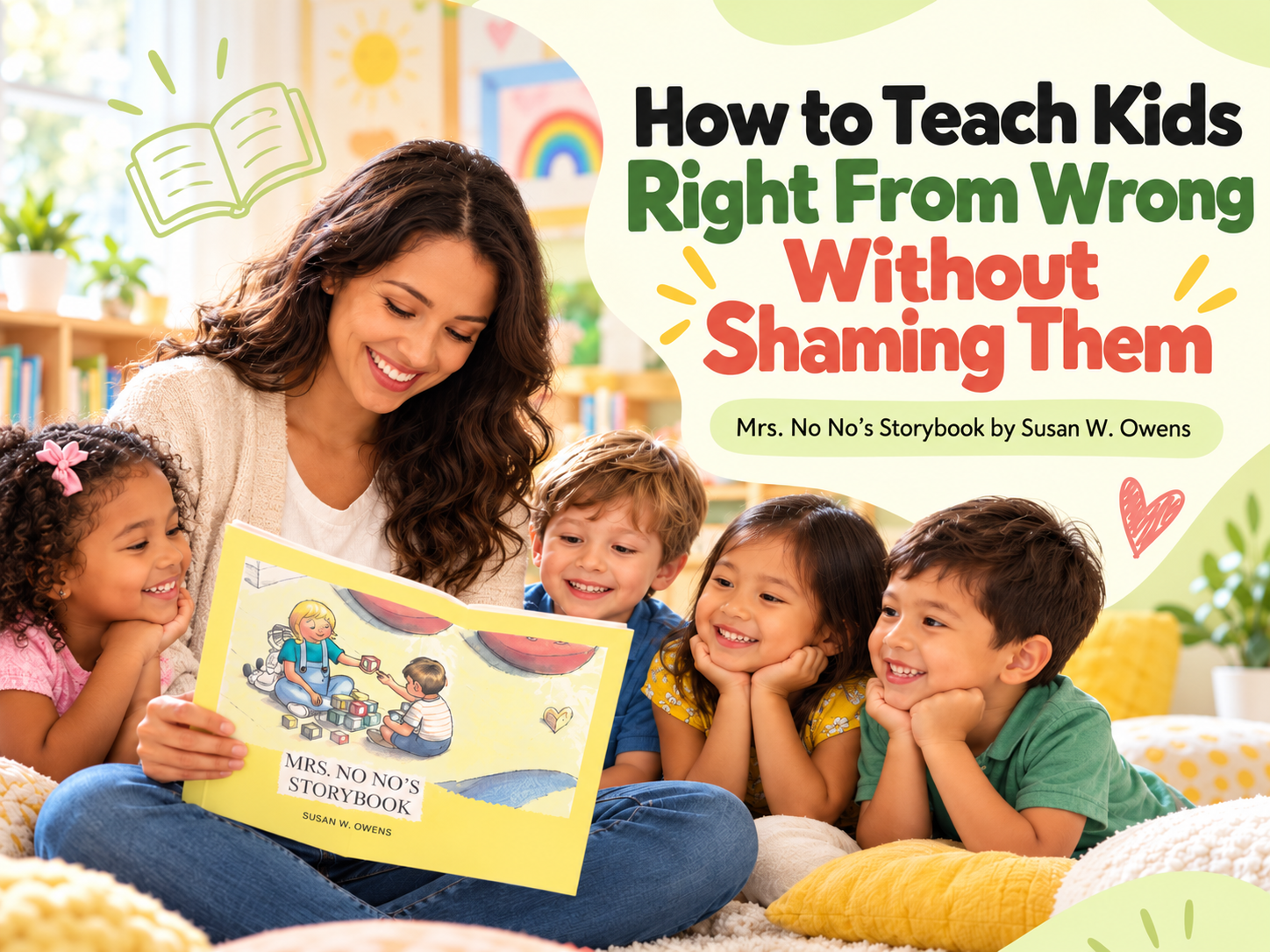
Mrs. No No’s Storybook by Susan W. Owens introduces a gentle character-building approach that invites children to reflect on their behavior. Its publisher describes the story as a resource for nurturing self-esteem and thoughtful choices, and notes its relevance to families, educators, and children with varied learning needs.
The book can be a conversation starter—not a substitute for individualized educational or developmental support. Children respond differently, and no single story or technique works for everyone.
Interested in bringing the story home or to your classroom? Explore Mrs. No No’s Storybook at Dorrance Bookstore. You'll be taken to the publisher's store to review the available edition and purchase options.
Small moments can have lasting meaning
Children do not need flawless days to develop confidence or kindness. They need repeated chances to try, encouragement when they make progress, and caring adults who help them understand what comes next.
A shared story, a gentle reminder, or an invitation to make things right can be a meaningful place to begin.
For more ideas, explore the Mrs. No No’s Storybook journal and discover the story behind the book.