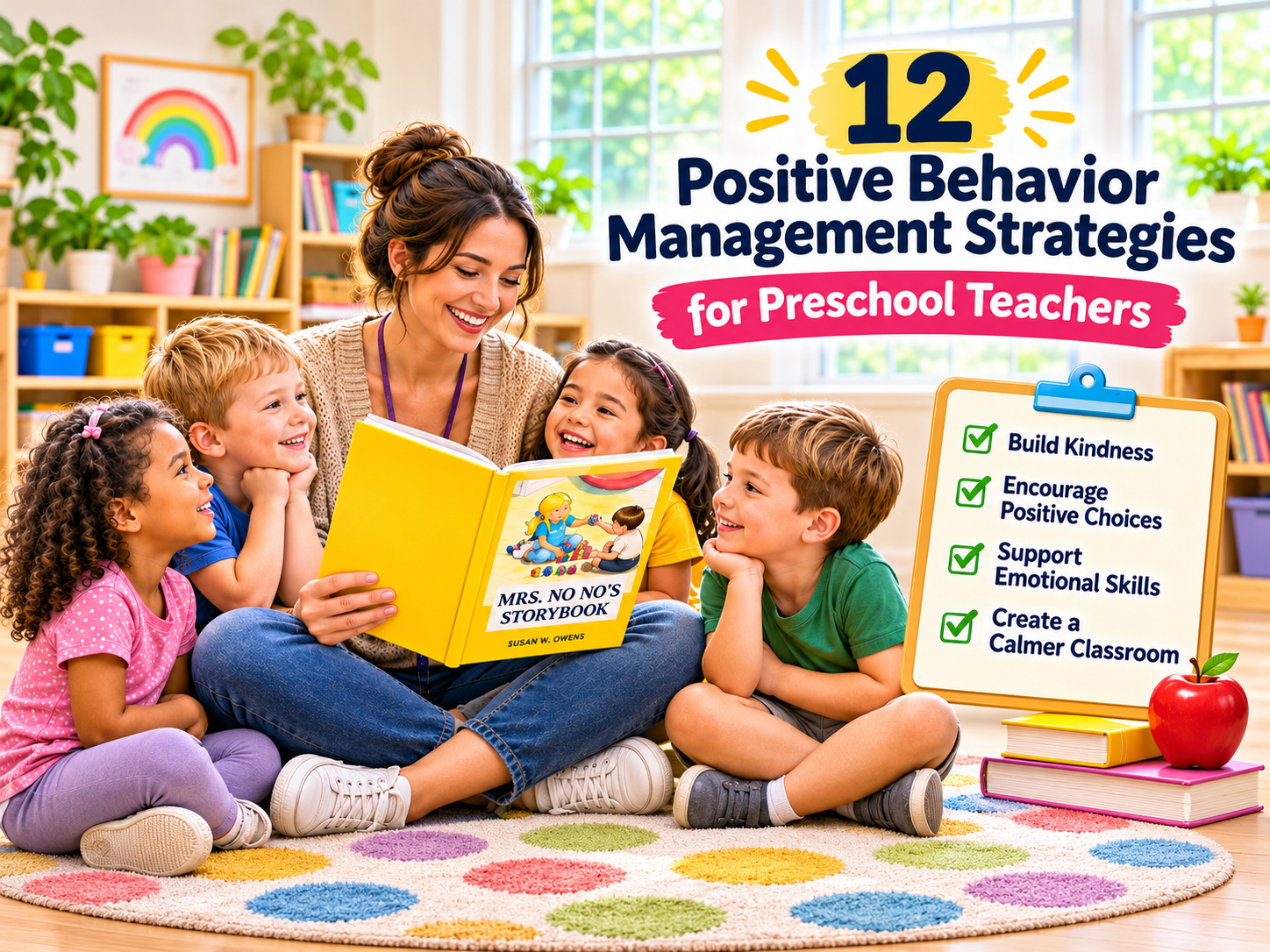
12 Positive Behavior Management Strategies for Preschool Teachers
Managing a preschool classroom isn't always easy.
One moment, children are happily building towers, painting pictures, and exploring new ideas. The next, two students are arguing over the same toy, someone refuses to clean up, and another child is overwhelmed because it's time to transition to a new activity.
Sound familiar?
For preschool teachers, maintaining a positive learning environment while supporting the emotional needs of young children can be one of the most challenging—and rewarding—parts of the job.
The good news is that effective preschool classroom behavior management doesn't have to rely on yelling, harsh punishment, or constant correction.
By building positive relationships, setting clear expectations, teaching emotional skills, and using engaging classroom activities, educators can help children develop better habits while creating a supportive environment for everyone.
In this guide, we'll explore 12 practical positive behavior management strategies for preschool teachers, complete with classroom examples, helpful phrases, and activities you can start using right away.
What Is Preschool Classroom Behavior Management?
Preschool classroom behavior management is the process of creating a safe, predictable, and supportive learning environment where young children learn positive behavior, emotional regulation, cooperation, and appropriate social skills.
Effective behavior management in preschool focuses on teaching children what to do, rather than simply correcting what they do wrong.
It includes:
• Building respectful teacher-child relationships.
• Establishing clear classroom expectations.
• Encouraging kindness, cooperation, and positive choices.
• Teaching emotional awareness and self-regulation.
• Creating predictable daily routines.
• Supporting children with different developmental and learning needs.
Unlike punishment-focused approaches, positive behavior management emphasizes guidance, encouragement, consistency, and skill development.
The goal isn't a classroom where children never make mistakes. It's a classroom where children feel safe enough to learn from them.
The National Center for Pyramid Model Innovations provides a widely used framework for supporting social-emotional development and addressing challenging behaviors in early childhood classrooms.
Why Is Positive Behavior Management Important in Preschool?
Preschool is an important period for developing early social, emotional, communication, and independence skills. Children are learning how to share materials, wait for turns, express disappointment, follow routines, and interact respectfully with others.
These skills require time, repetition, and adult support. A positive classroom environment creates opportunities for children to:
• Develop confidence and independence.
• Build friendships and cooperative relationships.
• Practice emotional regulation.
• Understand boundaries and expectations.
• Participate more comfortably in learning activities.
• Strengthen communication and problem-solving skills.
Positive behavior guidance is especially valuable in inclusive classrooms, where children may have different communication styles, sensory needs, developmental abilities, and learning preferences. Rather than expecting every child to respond to the same approach, effective teachers adapt their strategies to support individual needs.
12 Positive Preschool Classroom Behavior Management Strategies
1. Build Strong, Positive Relationships With Every Child
Key strategy: Connection comes before correction.
Children are more likely to engage with classroom expectations when they feel welcomed, understood, and respected. Before focusing on classroom rules, make meaningful connections part of your teaching routine.
Simple ways to build relationships include:
• Greet each child warmly when they arrive.
• Learn about their interests and favorite activities.
• Listen carefully when they communicate.
• Recognize their efforts and achievements.
• Spend short periods interacting during playtime.
• Use a calm, respectful tone during difficult moments.
Classroom example: A child refuses to join morning circle time. Instead of saying, “You need to sit down right now!” try: “I see you're still enjoying your blocks. Circle time is starting. Would you like to sit next to me or bring your favorite cushion?”
Teacher tip: Build small moments of personal connection into everyday routines, not only when a child needs redirection.
2. Create Simple and Positive Classroom Rules
Key strategy: Tell children what to do instead of only what not to do.
Preschoolers benefit from classroom rules that are short, understandable, and easy to remember. Instead of creating a long list of restrictions, focus on a few positively worded expectations.
Instead of SayingTeach This ExpectationDon't run!Use walking feet inside.Stop yelling!Use an indoor voice.Don't hit!Keep hands gentle and safe.Stop grabbing toys!Ask for a turn.Don't make a mess!Help take care of our classroom.
Use pictures alongside each rule so children can understand expectations even if they are not yet reading. Review classroom expectations during morning meetings, before transitions, and whenever children need a reminder.
Classroom activity: Invite children to help create an “Our Kind Classroom” poster with pictures showing gentle hands, listening ears, and helping friends.
3. Establish Predictable Daily Routines
Key strategy: Predictability helps children understand what comes next.
Young children may struggle when activities change unexpectedly. A predictable schedule helps children anticipate transitions and understand classroom expectations.
Sample routine: Arrival → Morning Circle → Learning Centers → Snack → Outdoor Play → Lunch → Rest → Storytime → Dismissal
Display the schedule using photographs, symbols, or illustrations. Review it together at the beginning of the day. When changes are necessary, prepare children ahead of time.
For example: “Today, we're going to the library before outdoor play. Let's look at our new schedule together.”
Teacher tip: Use a visual “First–Then” board for children who benefit from additional structure. Example: “First, put the blocks in the basket. Then, we can go outside.”
Consistent routines can reduce confusion and make classroom expectations easier to understand.
4. Use Positive Reinforcement and Specific Praise
Key strategy: Recognize the behavior you want children to practice.
Positive reinforcement is more meaningful when children understand which behavior is being acknowledged. Instead of repeatedly saying “Good job,” offer specific feedback.
• “I noticed you waited for your turn. That was patient.”
• “Thank you for using gentle hands with your friend.”
• “You put the books back where they belong. That was helpful.”
• “You asked for help when you felt frustrated.”
• “You invited someone to play with you. That was kind.”
These statements help connect actions with positive social skills. Praise should be genuine and appropriate to the child's preferences. Some children enjoy public recognition, while others may prefer a quiet smile, thumbs-up, or private encouragement.
Classroom activity: Create a “Kindness Moments” board featuring examples of helpful actions children demonstrated throughout the week. Keep recognition inclusive and avoid comparing children or turning kindness into a competition.
5. Teach Emotional Awareness and Self-Regulation
Key strategy: Children need to learn how to recognize and manage big feelings.
Preschoolers may experience frustration, excitement, disappointment, or anxiety without having the language or coping skills to express those feelings effectively.
Teachers can introduce emotional vocabulary through play, stories, pictures, and conversations. Start with familiar emotions:
• Happy
• Sad
• Angry
• Worried
• Excited
• Frustrated
Then teach age-appropriate ways to respond: “When I'm frustrated, I can ask for help.” “When I'm upset, I can take a break.” “When I feel angry, I can use words or pictures to tell someone.”
Classroom activity: The Feelings Check-In. Display illustrated emotion cards during morning circle. Invite children to point to, name, or otherwise communicate how they're feeling. Participation should be optional, and children should never be pressured to share private emotions publicly.
Teacher tip: Model coping strategies yourself. When you make a mistake, show children how you calmly respond and try again.
6. Redirect Challenging Behavior With Gentle Guidance
Key strategy: Teach an appropriate alternative to an unwanted behavior.
Redirection helps children move toward a safer or more appropriate activity without embarrassment or unnecessary confrontation.
Situation: A child starts throwing blocks. Instead of “Stop being naughty!” try: “Blocks are for building. Throwing can hurt someone. Let's build a tower together.”
Situation: A child grabs a toy from another student. Instead of “You're being mean!” try: “You both want the truck. Let's practice asking for a turn.”
The goal is to explain the boundary and demonstrate a better choice. When behavior creates a safety risk, intervene immediately to protect the children involved.
Teacher tip: Address the action without labeling the child as bad, difficult, or naughty.
7. Give Children Meaningful Choices
Key strategy: Offer independence within clear boundaries.
Preschool children are developing a growing desire for independence. Providing limited choices can help them participate in classroom routines without feeling powerless.
• “Would you like to use the red crayons or blue crayons?”
• “Would you like to clean up the puzzles or the building blocks?”
• “Would you prefer to sit on your cushion or next to me?”
Both choices should be acceptable to the teacher. If an activity is required for safety or classroom functioning, do not present participation as optional when it isn't.
Classroom activity: Create a choice board featuring pictures of approved activities, materials, or seating options. Choice boards may also be useful for children who benefit from visual communication supports.
8. Use Interactive Storytelling to Explore Positive Choices
Key strategy: Help children learn through characters, stories, and discussion.
Storytelling is a natural and engaging way to introduce lessons about kindness, empathy, responsibility, and appropriate behavior. Rather than delivering long lectures, teachers can use illustrated stories to help children reflect on everyday situations.
During storytime, pause and ask:
• “How do you think the character feels?”
• “Was that a helpful choice?”
• “What could the character try instead?”
• “How could we help a friend in this situation?”
• “What might happen next?”
Classroom activity: The Positive Choices Story Circle.
- Read a short illustrated story.
- Pause when a character faces a choice.
- Invite children to suggest possible responses.
- Discuss which responses are kind, respectful, and safe.
- Practice a helpful response through role-play.
For an additional storytelling resource, consider Mrs. No No's Storybook by Susan W. Owens. The story features a gentle character whose expressive eyes and nonverbal communication invite children to reflect on behavior and everyday choices.
Teachers can use the book as a discussion starter during read-aloud sessions, small-group activities, or classroom conversations.
Teacher tip: Keep storytime interactive and supportive. Children should never be singled out or embarrassed because their behavior resembles a character's actions.
9. Create a Calm and Supportive Classroom Space
Key strategy: Give children a safe place to practice calming skills.
A calm-down area is a supportive classroom resource—not a punishment corner. It can provide a quieter environment where children practice emotional regulation with appropriate adult guidance.
Consider including:
• Comfortable cushions or soft seating.
• Picture books about feelings.
• Emotion cards.
• Simple breathing visuals.
• Appropriate sensory tools.
• A visual chart showing calming choices.
Introduce the space when children are already calm. Explain that anyone may use it when they need a quieter moment.
For example: “This is our calm corner. You can come here when you want a little quiet time or need help feeling ready to join the group again.”
Some children may need adult co-regulation, communication supports, or a different sensory environment. Adapt the space to individual needs and school safety policies.
Teacher tip: Never use the calm area to isolate, threaten, or publicly shame a child.
10. Teach Sharing, Cooperation, and Problem-Solving Through Play
Key strategy: Social skills develop through guided practice.
Preschool children need repeated opportunities to learn how to share resources, take turns, solve disagreements, and cooperate with peers. Play-based activities make these skills easier to explore.
• Partner Building: Two children work together to build a tower using blocks.
• Turn-Taking Games: Children practice waiting while playing a simple board game.
• Helping Hands: Students work together to organize classroom materials.
• Pretend Play: Children practice asking politely, listening, and expressing needs.
When disagreements happen, ask: “What happened?” “What does each person need?” “What could we try?” “How can we make a plan that works for everyone?”
For young children who are not yet able to negotiate independently, adults can model the language and offer appropriate choices.
Teacher tip: Don't force children to share immediately without understanding the situation. Help them practice turn-taking, communication, and respecting others' needs.
11. Work With Families to Encourage Consistent Positive Behavior
Key strategy: Strong family-school partnerships support children's learning.
Preschool behavior management is more effective when educators and families communicate respectfully. Parents and caregivers can provide valuable information about a child's interests, communication style, routines, strengths, and support needs.
Ways to build partnerships include:
• Share classroom expectations in family-friendly language.
• Provide positive updates, not only behavior-related concerns.
• Ask families which approaches work well at home.
• Discuss progress privately and respectfully.
• Offer simple activities that families can practice together.
• Provide translated materials or communication supports when needed.
For example, if your classroom is practicing kindness, send home an optional activity: Tonight's Family Challenge: “Ask your child to share one kind thing they did today—or one kind thing someone did for them.”
For additional engagement, encourage families to read stories together and discuss the choices characters make.
Teacher tip: Avoid assuming every family has the same schedule, resources, or parenting approach. Focus on collaboration rather than judgment.
12. Observe Behavior Patterns and Personalize Your Approach
Key strategy: Understand what a child may be communicating through behavior.
Not every behavior challenge has the same cause. One child may become upset during transitions because unexpected changes are difficult. Another may struggle with sharing because they need more practice communicating with peers. A third child may become distressed because a classroom environment is too noisy or overwhelming.
Observe when challenging behaviors happen and look for patterns. Ask yourself:
• What happened immediately before the behavior?
• What might the child have needed?
• Was the activity developmentally appropriate?
• Did the child understand the instructions?
• Were communication supports available?
• What happened immediately afterward?
• What skill could we teach or support next?
For persistent challenges, collaborate with families, special education professionals, and other appropriate school support staff. In inclusive preschool classrooms, individualized strategies may include visual schedules, sensory accommodations, alternative communication systems, or tailored transition support.
Teacher tip: Focus on understanding the behavior and teaching an alternative skill rather than relying on repeated correction.
Preschool Classroom Behavior Management: Real-Life Examples
Here is a quick reference guide teachers can use during everyday classroom situations.
Classroom ChallengePositive ResponseSkill Being Taught
Two children want the same toy“Let's find a way for both of you to have a turn.”Cooperation and turn-taking
A child refuses cleanup“Let's put away the blocks together first.”Responsibility and routines
A student hits a peer“I won't let you hit. Let's keep everyone safe.”Safety and emotional regulation
A child interrupts circle time“You have something to share. Let's practice taking turns.”Listening and patience
A student becomes upset during transitions“Playtime is ending. Let's look at what comes next.”Flexibility and transitions
A child shouts during group activities“Let's practice a voice that feels comfortable for our group.”Communication and self-awareness
A student struggles to join play“Would you like me to help you ask if you can join?”Social interaction
Remember that these are starting points. Teachers should adapt their responses to the child's communication, developmental, sensory, and emotional needs.
How to Create a Positive Behavior Management Plan for Your Preschool Classroom
You don't need a complicated system to begin improving everyday classroom routines. Start with this simple five-step plan.
Step 1: Choose Three Core Expectations
Consider expectations such as: We are kind. We are safe. We take care of our classroom. Use pictures and demonstrate what each expectation looks like in different situations.
Step 2: Review Daily Routines
Identify the times when children need the most support, such as arrival, cleanup, transitions, meals, or dismissal. Introduce visual schedules and teach routines in small steps.
Step 3: Practice One Social-Emotional Skill Each Week
WeekSkillSuggested ActivityWeek 1KindnessHelping Hands activityWeek 2SharingPartner building gameWeek 3PatienceTurn-taking activitiesWeek 4EmpathyInteractive storytimeWeek 5Emotional awarenessFeelings picture cards
Step 4: Recognize Positive Choices
Offer specific, respectful encouragement when children demonstrate new skills. Notice effort and progress rather than expecting perfection.
Step 5: Review and Adjust
At the end of each week, consider: Which routines are working? Where do children need more support? Are classroom expectations clear? Which strategies seem helpful for individual children? What could we simplify next week?
Behavior management is an ongoing process of teaching, observing, and adapting.
Common Preschool Behavior Management Mistakes to Avoid
Even experienced educators may unintentionally rely on approaches that create frustration instead of learning.
- Giving too many instructions at once. Break directions into manageable steps.
- Focusing only on misbehavior. Recognize positive actions and progress throughout the day.
- Expecting all children to respond in the same way. Adjust strategies for individual developmental and communication needs.
- Using shame or public embarrassment. Correct behavior respectfully and privately when possible.
- Expecting immediate emotional control. Young children often need help regulating emotions before they can discuss what happened.
- Treating every challenging behavior as defiance. Consider whether a child is overwhelmed, confused, unable to communicate a need, or lacking a particular skill.
The goal is to build skills and supportive relationships—not demand perfect behavior.
How Children's Books Can Support Positive Classroom Behavior
Books are more than literacy resources. They can create meaningful opportunities to talk about emotions, choices, social relationships, and character.
Through interactive storytelling, teachers can invite children to explore situations in a relaxed and supportive setting. A character facing a difficult choice can become a starting point for discussions about kindness, responsibility, and empathy.
For example, after reading a story, invite children to complete these sentences:
• “A kind choice I can make is...”
• “When my friend feels sad, I can...”
• “If I make a mistake, I can...”
• “When I need help, I can...”
The conversations children have during storytime can then be revisited during real classroom experiences.
An illustrated children's book such as Mrs. No No's Storybook by Susan W. Owens can complement other positive behavior teaching strategies by giving educators a familiar character and opportunities for discussion.
The book is a storytelling and interaction resource, not a substitute for individualized behavioral support or professional intervention.
Frequently Asked Questions About Preschool Classroom Behavior Management
Tap or click each question to see the answer.
1. What are the best behavior management strategies for preschool classrooms?Effective preschool classroom behavior management strategies include building positive relationships, establishing simple rules, using predictable routines, providing positive reinforcement, teaching emotional skills, redirecting unsafe behavior, offering meaningful choices, and encouraging cooperation through play and storytelling.
2. How do you manage challenging behavior in preschool without punishment?Start by ensuring everyone's safety, identifying what may be contributing to the behavior, and helping the child develop an appropriate alternative skill. Use calm communication, supportive routines, redirection, and reasonable boundaries rather than shame or harsh consequences.
3. What are examples of positive reinforcement in preschool?Positive reinforcement can include specific verbal encouragement, smiles, thumbs-up gestures, meaningful acknowledgment, and attention to helpful behavior. For example, “You waited while your friend finished using the crayons. That was patient.”
4. How can preschool teachers encourage children to follow classroom rules?Keep rules simple, positively stated, and visible through pictures. Teach them explicitly through modeling, role-play, stories, and guided practice. Remind children before challenging situations and acknowledge appropriate behavior consistently.
5. How should teachers handle tantrums in a preschool classroom?First, make sure the child and others are safe. Use a calm voice, reduce unnecessary stimulation when appropriate, and provide emotional support. Avoid lengthy explanations during intense distress. Once the child is calm, help them understand what happened and practice an alternative response.
6. How can storytelling improve positive behavior in preschool?Storytelling provides opportunities to discuss feelings, choices, consequences, empathy, and social situations. Teachers can pause during a book to ask open-ended questions, invite different perspectives, and practice helpful responses through role-play.
7. What is the difference between classroom discipline and behavior management?Classroom discipline generally refers to teaching and responding to behavior expectations. Behavior management is broader and includes classroom design, routines, relationships, prevention strategies, skill instruction, individualized supports, and responses to behavior. Both approaches should prioritize safety, dignity, and learning.
8. How can teachers support children with autism in preschool classrooms?Teachers can collaborate with families and specialists to provide individualized supports such as visual schedules, predictable routines, clear communication, sensory accommodations, and appropriate communication systems. Strategies should reflect each child's strengths, needs, preferences, and educational plan.
9. What are the most important preschool classroom rules?Many preschool classrooms benefit from three broad expectations: be kind, be safe, and take care of our classroom. Teachers can explain and demonstrate what these expectations look like during play, meals, learning centers, and transitions.
10. Can positive behavior management work in inclusive classrooms?Yes. Positive behavior approaches can provide a useful classroom-wide foundation when combined with individualized support. Teachers should adapt communication, routines, expectations, and teaching strategies to meet different developmental and learning needs.
Meet Mrs. No No's Storybook: A Gentle Story for Teaching Positive Choices
Every preschool teacher wants children to feel safe, respected, and encouraged while learning important life skills. But teaching positive behavior takes time, consistency, meaningful connections, and creative resources.
What if storytime could become another opportunity to explore kindness, respect, and making good choices?
Introducing Mrs. No No's Storybook by Susan W. Owens
Mrs. No No's Storybook is a 40-page illustrated children's book featuring a gentle fictional character who uses expressive eyes and nonverbal cues to encourage conversations about everyday behavior.
Written by Susan W. Owens, a retired special education teacher with 41 years of teaching experience, the story reflects her commitment to helping children develop character, confidence, and positive habits.
Susan's educational experience includes conducting workshops and presenting her research at Oxford University.
Why Preschool Teachers May Enjoy This Book
• Encourages positive behavior conversations: Use the story to discuss kindness, responsibility, and choices in an age-appropriate way.
• Supports interactive read-aloud activities: Pause during storytime, explore the character's expressions, and invite children to suggest helpful responses.
• Creates opportunities for social-emotional learning: Discuss feelings, friendship, respect, and the importance of considering others.
• Complements inclusive classroom activities: Use visuals, discussion, and adapted communication supports to make storytime accessible to different learners.
• Offers a gentle approach to character education: Encourage reflection and learning without embarrassing or labeling children.
A Simple Mrs. No No Storytime Activity
- Read Together: Introduce the character and invite students to notice her facial expressions and actions.
- Ask a Question: “What do you think Mrs. No No wants the children to understand?”
- Explore Better Choices: Invite children to suggest kind, safe, or respectful responses to situations discussed during the story.
- Practice Together: Use puppets, pictures, or role-play to demonstrate positive choices.
- Encourage Real-Life Connections: Later in the day, gently remind children of the kind choices discussed during storytime.
Avoid using the character to shame or single out a child.
Explore Mrs. No No's Storybook
Discover how illustrated storytelling can create opportunities for positive behavior conversations at home and in early childhood classrooms.
🌐 Visit the Official Website: https://mrsnono.com/
🛒 Shop Mrs. No No's Storybook Today!
https://bookstore.dorrancepublishing.com/products/mrs-no-nos-storybook-1
Explore available book formats, including the boxed set and eBook, through Dorrance Publishing.
Final Thoughts: Positive Behavior Begins With Positive Guidance
Preschool classroom behavior management isn't about controlling every action or expecting perfect behavior. It's about creating a learning environment where children feel valued, understand expectations, develop social-emotional skills, and receive the guidance they need to grow.
By combining predictable routines, positive reinforcement, meaningful choices, emotional support, and interactive storytelling, teachers can make everyday classroom experiences opportunities for learning.
Remember: children don't need perfect teachers. They need patient, consistent, responsive educators who understand that learning positive behavior takes time.
Because the most meaningful classroom lessons aren't simply about following rules—they're about learning to treat ourselves and others with kindness.