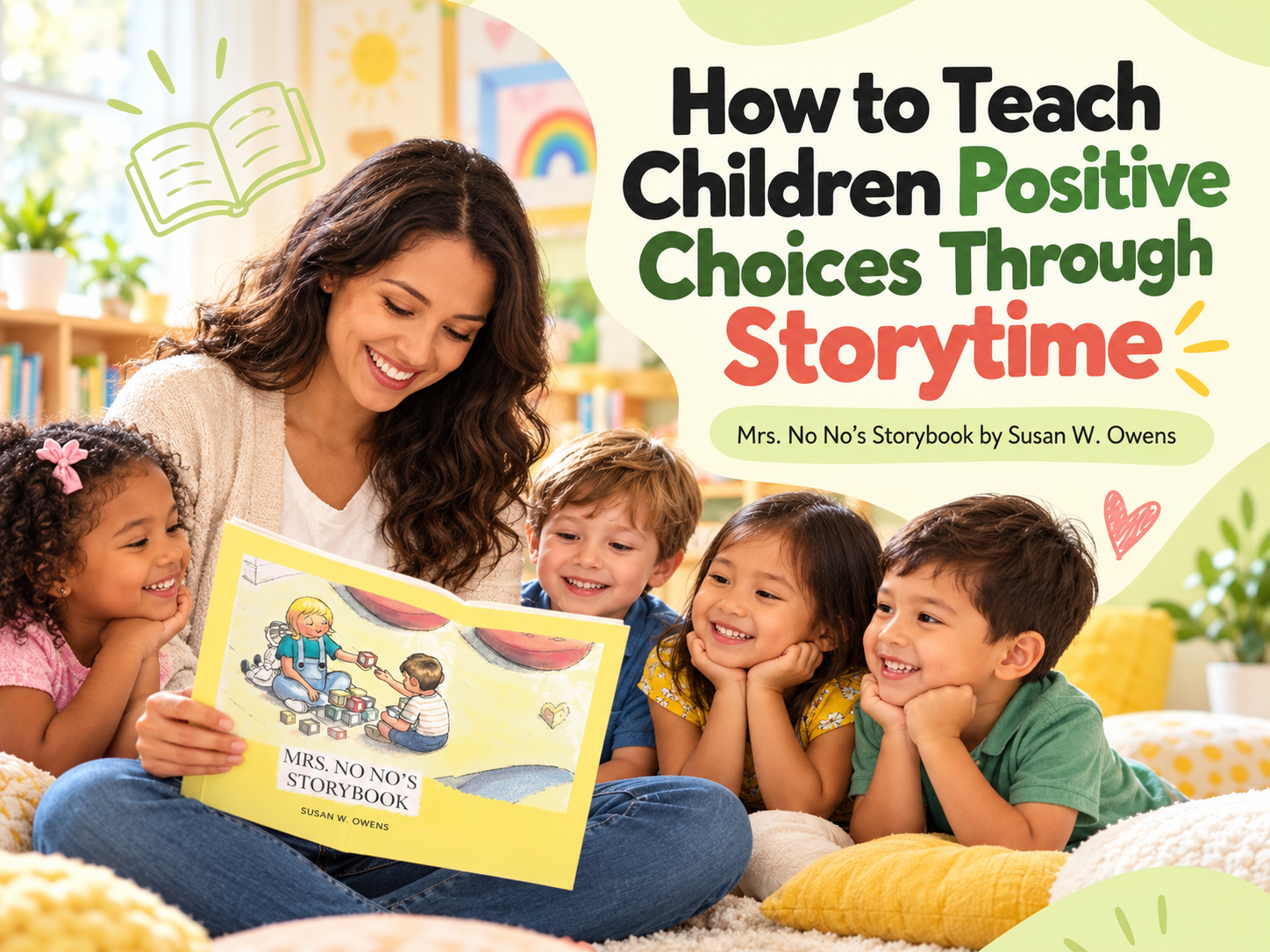
Children learn about their world through experiences, relationships, play, and stories. A good story gives them a safe opportunity to notice what characters do, talk about how others might feel, and imagine what they could try in a similar situation.
If you are a parent, caregiver, or early-years teacher, you do not need a complicated lesson plan to start. A few thoughtful questions and a gentle routine can turn an ordinary read-aloud session into a meaningful conversation about everyday choices.
Why stories can help children explore behavior
Young children may find it easier to talk about a character’s actions than their own. Instead of asking, “Why did you do that?” you can begin with “What do you think the character could try next?” That little change makes room for curiosity rather than embarrassment.
Stories also allow adults to model language children can use when they need help, feel frustrated, or want to try again. The goal is not to demand perfect behavior; it is to help children recognize options and practice what to do next.
Seven practical storytime activities
1. Start with a simple choice question
Before you read, ask: “What does being kind look like?” or “What could you do if you made a mistake?” Keep answers short and accept more than one idea.
2. Pause before the character responds
At a key moment, ask: “What might happen next?” Invite children to suggest two or three possibilities. This builds participation without turning storytime into a test.
3. Name feelings without labeling the child
Try “The character looks disappointed,” rather than “The character is bad.” Describe actions and emotions separately. Children can learn that an unhelpful choice is something to work on, not their identity.
4. Practice one sentence aloud
Choose a phrase a child can use later, such as “Can I have a turn?” “Please help me,” or “I can try again.” Say it together in a calm voice and let children practice with a toy or puppet.
5. Act out a kinder alternative
Use two stuffed animals or paper characters to replay a scene. Show an unhelpful choice, then invite children to demonstrate a more thoughtful one. Keep the play light and collaborative.
6. Connect the story to a real routine
Ask one practical question: “When might we use that idea at home or school?” Linking storytime to tidying up, taking turns, or listening can make the discussion more concrete.
7. Finish by celebrating effort
Praise the process: “I like how you thought of another way,” or “You kept trying.” A child may need many opportunities to practice, and that is a normal part of learning.
A simple ten-minute read-aloud routine
• Minutes 1–2: Invite children to predict what the story might be about.
• Minutes 3–6: Read together and pause for one or two open-ended questions.
• Minutes 7–8: Act out a helpful choice using a toy or drawing.
• Minutes 9–10: Ask everyone to name one small action they could practice later.
For a group, allow children to respond by speaking, pointing, drawing, or simply listening. Participation does not have to look the same for everyone.
Introducing Mrs. No No’s Storybook
Mrs. No No’s Storybook by Susan W. Owens is presented by its publisher as a character-building resource that encourages young learners to consider behavior and self-esteem. Families and educators can use the book as a starting point for discussions about positive choices and guidance. The publisher also describes the author's extensive teaching background.
The activities above are general storytime ideas inspired by those themes; they are not quotations from the book or claims about its effectiveness in any particular setting.
Explore the book: View Mrs. No No’s Storybook at Dorrance Bookstore.
Frequently asked questions
What age group can try these activities?
Preschool and early elementary children may enjoy them, but adapt the questions, pace, and expectations to each child's developmental needs.
Should I stop reading whenever a child makes an unhelpful choice?
Not necessarily. Aim for a calm and enjoyable experience. A brief question or a discussion after reading may be more useful than repeated interruptions.
Can stories replace individual support for behavioral or developmental concerns?
No. Storytime is one educational activity, not a substitute for personalized advice or school-based support when needed.
A final thought
A meaningful storytime conversation does not require a perfect answer. It begins with adults listening, showing patience, and giving children opportunities to think about what they can do next. One small conversation today can become a practice opportunity tomorrow.